


 LASERWAR
 CyberTag
 LaserArena
 May maneuvers
 Laserwar CRM
 Laser tag
 ZombieTag
 Lasertag
 Alphatag
 Laser tag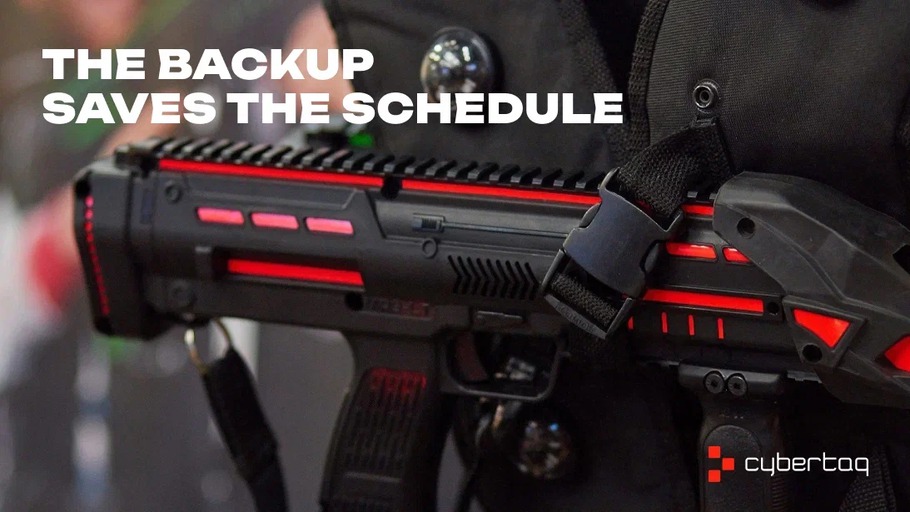
When It’s Time for a Club to Expand Its Equipment Pool
When a laser tag club first opens, equipment is usually calculated by the number of players: as many people as can play at the same time, that many sets are needed. For launch, this approach makes sense. The key is to test demand, gather the first groups, and allocate the budget carefully.
But in real operations, a club quickly outgrows this starting formula. Regular players appear, groups become larger, the schedule gets tighter, and customers begin to expect not just a game, but a stable and varied service.
At this point, the owner is no longer buying only additional sets. They are buying business continuity: so that a paid game starts on time, the administrator does not have to solve technical issues in front of guests, and the customer leaves with emotions, not with a reason for a negative review.
Let’s look at the signs that show it is time for a club to expand its capabilities.
Backup Sets Are Being Used in Regular Games More and More Often
A backup set is needed for smooth club operations. It helps quickly replace equipment, accept an extra participant, or run a game without delay if one set has been sent for inspection.
If spare sets are regularly used as main equipment, the club has almost no safety margin left. This means that in any non-standard situation, the administrator has to solve the problem right before the game starts.
A simple practical guideline is this: if backup equipment goes into games more than once or twice a week, it should already be considered part of the regular workload. In that case, the club needs a new reserve that will protect the schedule.
A good reserve helps preserve what matters most: the game starts on time, the staff acts confidently, and guests do not see the internal technical side of the business.
We covered a similar situation in the article “5 Minutes Before the Game Starts: What to Do If One Laser Tag Set Fails?”:
https://cybertag.com/news/5-minutes-before-the-game-starts-what-to-do-if-one-laser-tag-set-fails/
The Club Starts Limiting Groups
The next signal appears even at the booking stage. A group wants to come with a larger number of players, but the administrator has to suggest another time, split the players into two sessions, or reduce the number of participants.
Once, this may seem like a normal working situation. But if it happens repeatedly, the club starts losing revenue. The demand is already there, people are ready to play, but the current equipment capacity does not allow the club to host them comfortably.
For the owner, the calculation is simple: every refusal or rescheduling is not only the loss of one specific game. It is also the risk that the customer will choose another venue where their whole group can play together.
If the club regularly cannot accept groups of the desired size on weekends, then equipment is already limiting growth. This is especially noticeable during birthday parties, corporate games, club meetings, and tournaments.
Regular Players Want New Experiences
Repeat visits are one of the main signs of a healthy club. If people come back, the format works.
But regular audiences quickly develop higher expectations. Players remember scenarios, know the features of the arena, compare results, and want a new experience. They are interested in different roles, more complex game formats, statistics, achievements, and tournaments.
Here, club growth is no longer only about the number of participants. The depth of the game experience becomes more important. If regular players get new scenarios and new tasks, they have a reason to return more often.
LASERWAR provides tools for this development: scenarios, statistics, game devices, settings, awards, and flexible player management. That is why additional sets help not only accept more people, but also develop the club community.
The Team Is Working in a Rush More Often
When equipment is calculated only for minimum load, administrators feel it quickly. Before the game starts, they have to check which sets are charged, what can be issued, and whether there is enough equipment for everyone.
When traffic is low, these issues can be handled manually. On a busy day, any delay starts affecting the schedule.
A warning sign is when preparing or replacing a set takes more than 3–5 minutes and the group has to wait for the start. For the customer, this is no longer a technical nuance. It becomes part of their impression of the club.
Stable operation looks different:
- equipment is checked before guests arrive;
- backup sets are ready to be issued;
- the game starts on schedule;
- diagnostics are handled after the session.
For the customer, this looks like confident organization. For the owner, it protects revenue, the schedule, and the club’s reputation.
The Club Is Ready to Move to the Next Level
Club growth is not only reflected in the number of sessions. At some point, the task becomes building a community, hosting events, developing regular games, and offering customers a deeper level of immersion.
Additional sets help host large groups and run events without putting unnecessary pressure on the staff. The club gains more freedom: it can plan tournaments, organize game days for regular customers, accept new teams, and not worry that one technical issue will disrupt the schedule.
Customers see that the club is developing. And that gives them a reason to return.
How an Owner Can Make the Decision
A practical approach is to evaluate not only the number of players in one session, but the club’s entire operating model.
Check the following points:
- how many people come on peak days;
- how often additional participants appear;
- whether there is enough reserve equipment for weekends;
- whether groups have to be rescheduled or split;
- whether there are plans for tournaments and scenario-based games;
- whether the regular audience is growing;
- how long it takes to replace a set before the start.
A working formula can be this: the maximum group size plus a 10–20% reserve. If the club actively runs events, tournaments, or weekend games with a dense schedule, it is better to plan at least 2–4 additional sets above the usual workload.
If several of these points have already become a regular part of operations, the club should start preparing for growth.
It is time for a club to expand its capabilities if backup sets are regularly used in games, administrators are increasingly working in a rush, groups are becoming larger, and regular players are waiting for new scenarios.
At this stage, the owner is investing in confidence: the paid game will take place, the customer will get a bright experience, the team will run the shift calmly, and the club will maintain its reputation even on a busy day.
The key is to prepare for growth before the current workload starts limiting the business.
You must be logged in to post a comment.