


 LASERWAR
 CyberTag
 LaserArena
 May maneuvers
 Laserwar CRM
 Laser tag
 ZombieTag
 Lasertag
 Alphatag
 Laser tag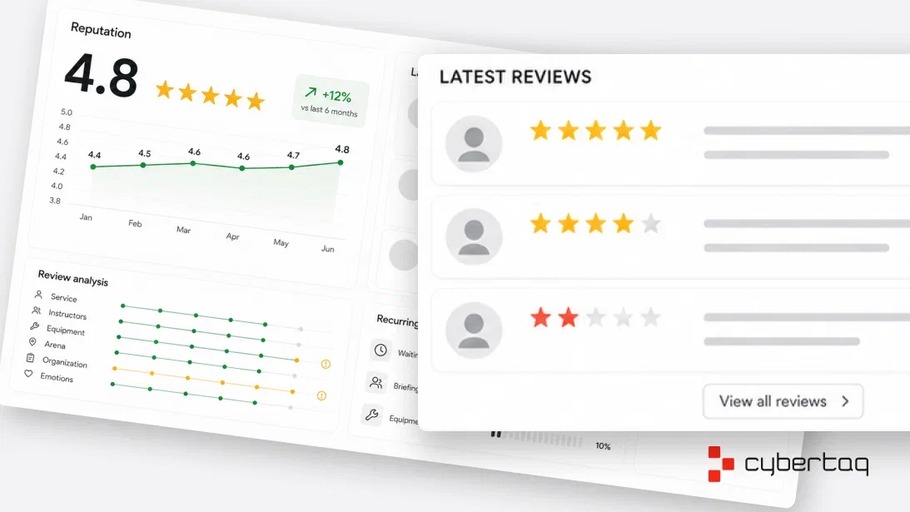
Reputation Management in the Digital Age: How Laser Tag Clubs Should Work with Reviews
Summer is a high-speed season for laser tag clubs: corporate events, birthday parties, mobile games, city festivals, camps, and family weekends. The more events you run, the more emotions your guests experience, and the more likely they are to leave reviews.
A positive review helps sell your services without discounts or long explanations. A negative review can scare away a future customer, even if the problem happened only once. Club owners have a powerful tool: instead of waiting until their reputation starts to decline, they can manage customer feedback systematically.
The end of summer is a good time to do this work. The peak event season is coming to an end, guests have left plenty of impressions, staff still remember difficult situations, and owners have real material for analysis. Many businesses review results at the end of the year, but for a laser tag business, it is useful to make an interim review now: what guests praised, where complaints appeared, and which processes should be improved before the next wave of events.
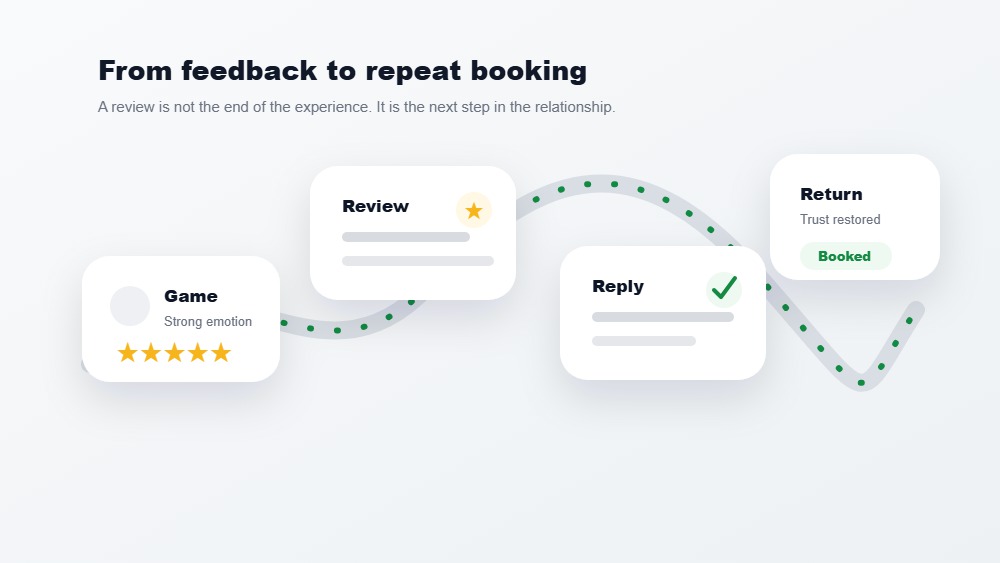
The key idea: reviews are not only an assessment of a past event. They are a sales tool, a map of operational mistakes, and a chance to win back a customer who was almost lost.
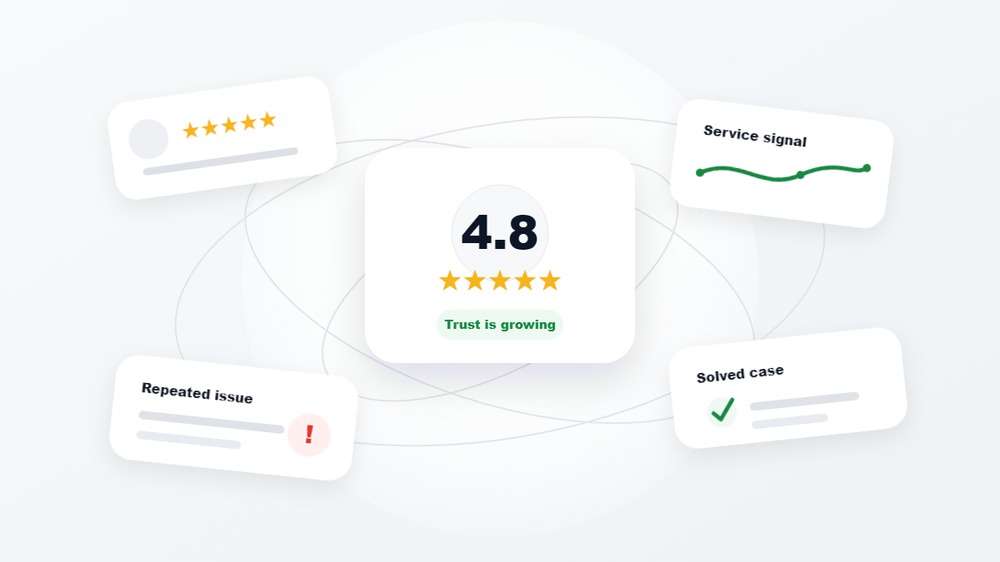
Why Reviews Matter So Much for a Laser Tag Club
Customers rarely choose a laser tag club based only on equipment specifications. They look at the overall experience: whether other guests had fun, how instructors worked with children, how easy it was to book a game, whether the arena was clean, and how quickly the team solved problems.
Reviews answer questions that a website does not always cover:
- Can parents trust this club with a children’s party?
- Can instructors work well with beginners?
- Do games start on time?
- Is the equipment reliable?
- How does the club react when something goes wrong?
- Do guests come back again?
For the club owner, reviews are also free diagnostics. If the same issues appear in several reviews, the problem is probably not accidental. For example, guests may regularly mention long waiting times before games, unclear instructions, or discharged headbands. That means the process needs to be fixed, not just explained individually to every customer.
Proactive Review Collection: Don’t Wait for Guests to Remember
Most satisfied guests do not leave reviews not because they do not care, but because they simply forget. After the event, people go back to their daily routine, photos stay on their phones, and emotions fade. That is why a club should ask for feedback at the right moment and in the right way.
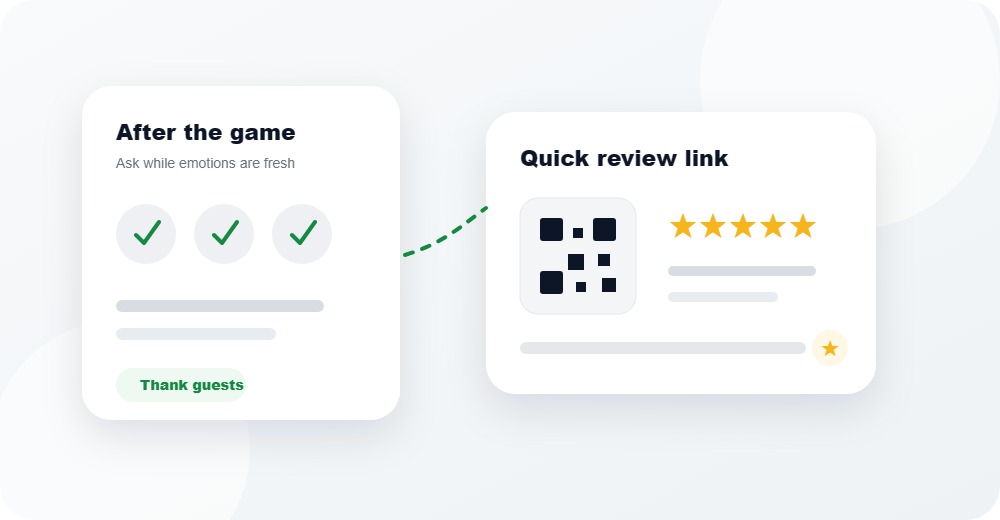
The best moment is immediately after the game, while the team is still discussing the highlights. An instructor or administrator thanks the guests and briefly asks them to share their impressions on a convenient platform: Google Reviews, Yelp, TripAdvisor, Facebook, Instagram, TikTok, or any local platform where the club communicates with customers.
The request should sound natural and pressure-free:
- “If you enjoyed the game, we would really appreciate a review. It helps us a lot, and it helps new guests feel confident about booking.”
- “We would be grateful for your feedback: what you liked and what we could improve. We really do read reviews after every game.”
- “If you have a minute, please leave us a review online. It helps more people discover our club.”
Do not ask only for five-star reviews. Ask for honest feedback. It looks more genuine and reduces the risk that guests will feel manipulated.
How to Build Review Requests into Club Operations
Collecting reviews should not depend on the mood or memory of the administrator. It should be part of the standard customer service process.
After the final game, the instructor thanks the team and highlights the best moments of the match. This helps guests leave with a positive emotional impression.
During payment or farewell, the administrator asks for an honest review and shows a QR code. This way, the guest immediately opens the right page without having to search for it.
Within 2–6 hours, the club sends a thank-you message with photos and a review link. This brings the guest back to the positive emotions at a convenient moment.
A few days later, the administrator replies to published reviews. Future customers see that the club is active, attentive, and involved.
Place QR codes at the front desk, in the waiting area, on business cards, in post-game messages, or near the photo zone. The easier the path to the review form, the more likely guests are to leave feedback.
For children’s parties, a follow-up message to parents works well: a thank-you note, several photos, a link to the album, and a polite request to share their impressions. For corporate events, send a message to the organizer and ask them to rate the experience and mention what the team enjoyed most.
What to Analyze After the Summer Season
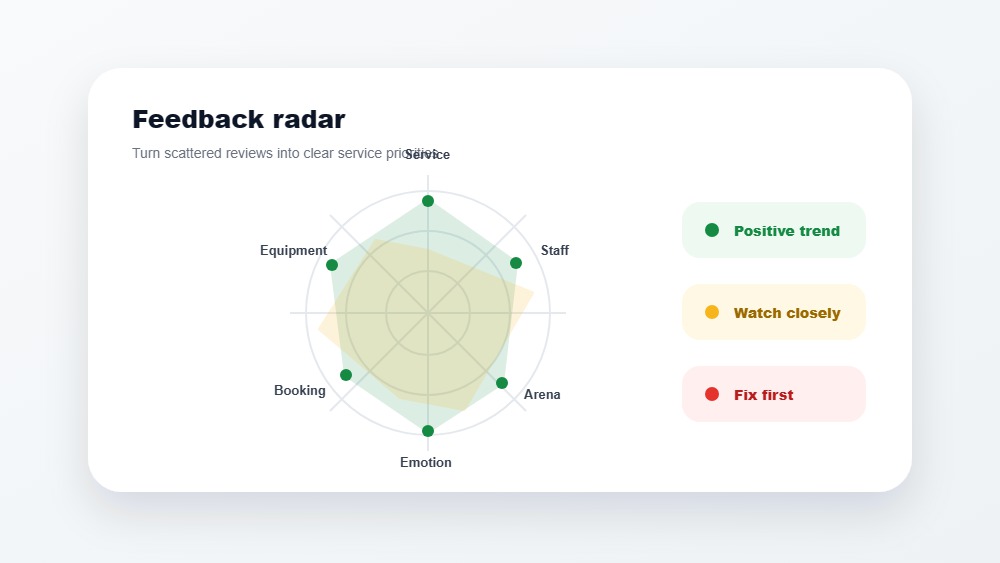
Start the summer review not with a vague conclusion like “everything went fine,” but with a specific table. Collect reviews from all platforms for June, July, and August, then group them by topic.
- Service: staff politeness, response speed, booking convenience.
- Instructors: clarity of rules, work with children, engagement, safety.
- Equipment: reliability of taggers, sensors, scenario devices, battery charge.
- Arena: cleanliness, ventilation, lighting, obstacles, changing rooms, waiting area.
- Organization: delays, queues, overlapping groups, length of safety briefing.
- Emotions: what guests described as the most memorable part of the game.
Then look for repeated signals. One negative review may be subjective. Five similar reviews in a month are already a management issue.
Practical tip: create a simple table with these columns: date, platform, source, rating, topic, short summary, responsible person, solution. Even this basic document quickly shows where the club is losing the customer experience.
How to Respond to a Positive Review
Positive reviews also deserve a response. If a club only reacts to negative feedback, it misses a chance to strengthen loyalty.
- Thank the guest by name if it is available.
- Mention a specific detail from the review: a birthday party, corporate event, kids’ game, or instructor’s work.
- Briefly show that the feedback matters to the team.
- Invite the guest to return: for a new scenario, tournament, mobile game, or another event.
Example:
“[Name], thank you for your review! We’re happy to hear that the birthday party was active and that the kids enjoyed the base capture scenario. We’ll pass your kind words on to the instructor. We’d love to see your team again. Next time, try our night game or a digital flag scenario.”
This response is seen not only by the author, but also by future customers. It shows real communication, not a generic copy-paste reply.
How to Respond to a Negative Review
A negative review should not be ignored, deleted without reason, or met with an argument. Even if the guest is mistaken, the public response should be calm and professional.
The working approach has two parts: a public response and a move to private communication.
Public Response
- Thank the guest for their feedback.
- Acknowledge their emotion: “We understand that this situation affected your experience.”
- Briefly explain that the club will check the details.
- Do not argue in the comments and do not reveal personal information.
- Offer to continue the conversation by direct message, phone, or messenger.
Example:
“[Name], thank you for writing to us. We’re sorry that the game left this impression. We would like to look into the situation: we’ll check the booking details, equipment logs, and the instructor’s comments. Please message us directly or leave your phone number so we can contact you and offer a solution.”
Private Communication
- Clarify the date, time, event format, and organizer’s contact details.
- Listen to the guest without interrupting or making excuses.
- Check the information with the administrator, instructor, and booking records.
- If the club made a mistake, apologize specifically, not in general terms.
- Offer compensation that matches the problem.
- After the issue is resolved, politely ask the guest to update the review if they feel it is appropriate.
Compensation does not always mean a refund. Sometimes an extra mission, a discount for the next game, a rescheduled time slot, a photo package, or an invitation to replay the game is enough.
Case Study: A Free Game After a Complaint Can Bring a Customer Back
Imagine a typical situation on a busy summer day. Several groups are scheduled back to back. One team arrives for a birthday party, but the previous game runs late. The briefing is rushed, some players do not fully understand the rules, and one tagger has to be replaced during the match. After the party, a parent leaves a review: “The kids had to wait, the equipment failed, we won’t come back.”
A weak response would be: “Everything worked fine, and you were late yourselves.” This kind of comment almost always looks worse than the review itself. Future customers see not a solution, but a conflict.
A strong response looks like this:
- The club publicly thanks the guest for the signal and offers to discuss the situation privately.
- The owner or manager contacts the event organizer.
- The team checks the schedule, equipment replacement, and instructor’s work.
- The club admits that because of the tight schedule, the briefing was rushed and the tagger replacement spoiled the rhythm of the game.
- The guests are offered a free replay or a full additional round on a convenient date.
- For the replay, the club assigns an experienced instructor, checks the full equipment set in advance, and gives the group extra attention.
What happens next? The customer sees that they were not dismissed. The children get a new positive experience. The parent updates the review: “There was a problem, but the club contacted us, invited us for a free game, and fixed everything.”
For reputation, this kind of review can sometimes be more valuable than a perfect five-star rating: it shows that if something goes wrong, the club takes responsibility for its service.
Important: a free game does not buy a review. It restores trust. Ask the guest to update their rating only gently and only after the problem has truly been solved.
How to Keep Review Management Organized
If reviews are handled by “whoever has time,” responses will differ in tone and quality. It is better to assign a responsible person and create a short procedure.
- Check key review platforms daily during peak season and several times a week during quieter periods.
- Reply to new reviews within 24 hours.
- Pass negative reviews to the manager or owner.
- Record repeated problems in a shared table.
- Discuss conclusions with administrators and instructors once a month.
- After making improvements, return to the reviews and check whether the problem has disappeared.
The team needs ready-made response templates, but they should not be copied blindly. A template helps keep the structure, while specific details make the communication human.
What to Improve Before the Fall and Winter Season
After analyzing summer reviews, choose several specific actions. For example:
- rewrite the briefing script for beginners and children;
- add a technical equipment check before every group;
- increase the buffer between groups if delays were common in summer;
- update scenarios for returning guests;
- prepare clear post-game messages with a review link;
- train administrators to work with complaints;
- add QR codes for review platforms;
- create an end-of-shift checklist: which reviews appeared and what requires a response.
This approach helps the club enter the fall and pre-holiday season with stronger service. The club does not simply collect ratings, but uses the summer flow of guests as material for growth.
Conclusion
Reputation management does not start with beautiful replies online. It starts with the attitude toward feedback. If a club asks for reviews, responds quickly, investigates complaints, and improves processes, its digital reputation becomes manageable.
For a laser tag club owner, reviews bring three results:
- they help new guests choose your venue;
- they bring customers back after difficult situations;
- they show which parts of the service need improvement.
Summer is ending, which means now is the right time to open all review platforms, collect feedback from the season, and work on mistakes. One carefully handled negative review can bring a customer back and prove that your club can be trusted not only when everything goes perfectly.
You must be logged in to post a comment.