


 LASERWAR
 CyberTag
 LaserArena
 May maneuvers
 Laserwar CRM
 Laser tag
 ZombieTag
 Lasertag
 Alphatag
 Laser tag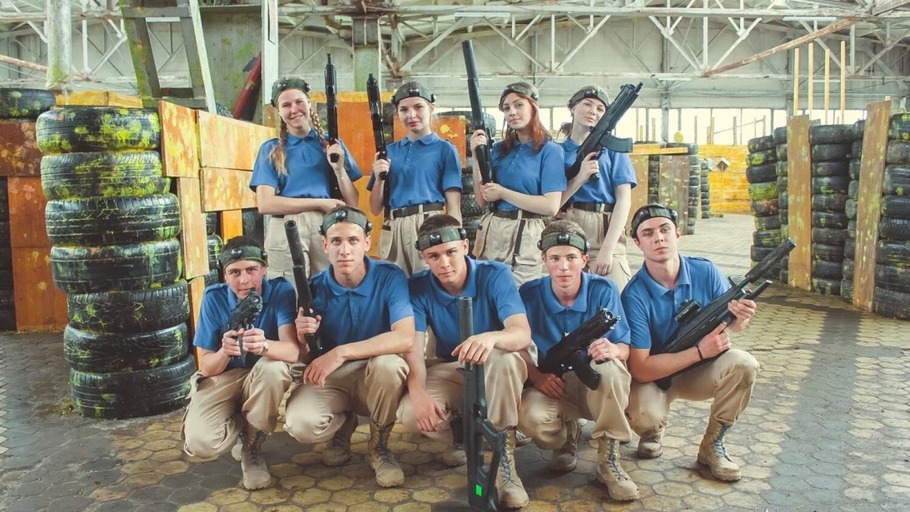
Laser Tag for Children’s Camps: Equipment and Game Programs
A children’s camp program is not built around one activity only. Between scheduled sessions, children need time for outdoor games, physical activity, communication, team events, and shared experiences. The longer a child stays at camp, the more important variety becomes: the same activity quickly stops feeling special if it is repeated without changes.
For children’s camps, laser tag makes it possible to build several different formats around a single set of equipment. Today it can be a small team game, tomorrow a competition between groups, and another day a scenario with an objective capture or a shooting accuracy challenge. The rules and settings change, but the equipment base remains the same.
At the same time, we are talking about sports and recreational game equipment. Laser tag is not a medical or rehabilitation activity. Whether a specific child can take part, and what level of physical activity is acceptable, is determined by the camp administration and responsible staff.
What Can Be Run With One Equipment Set
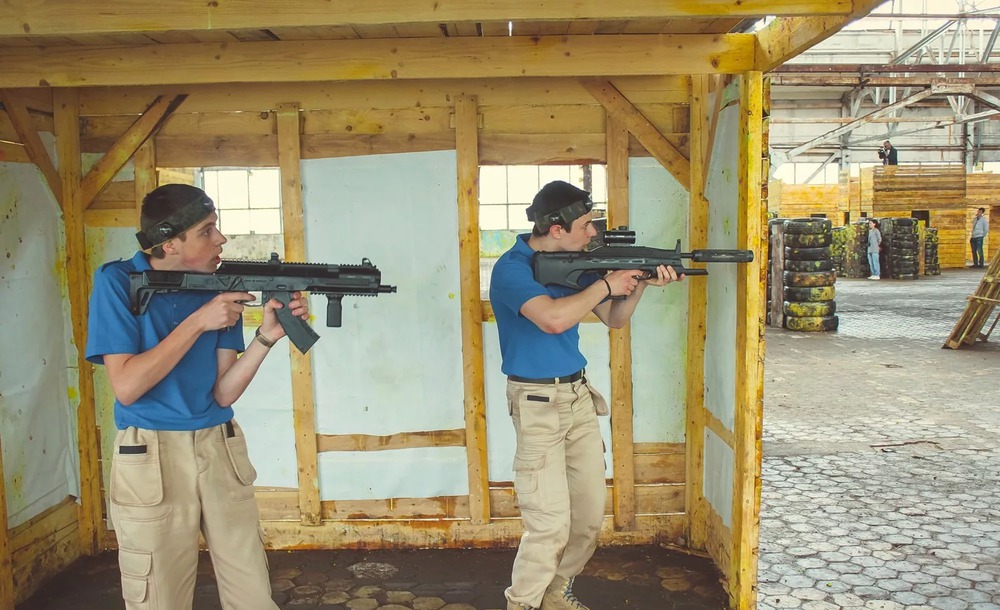
The simplest format to start with is a regular team game. Participants are divided into two teams, receive blasters and hit sensors, and play according to preset game parameters.
Once staff and children become familiar with the equipment, a regular match can be expanded with additional objectives.
For example, a control point can be placed on the field. Victory then depends not only on hits: the team must reach the object, capture it, and hold it for a set period of time.
Another option is object defense. One side has to protect a game device, while the other side tries to complete its objective within a limited time. This scenario encourages players to assign roles and communicate within the team.
For smaller groups, it is possible to move away from the classic team match completely and use electronic targets instead. In this case, the activity becomes an individual or team challenge focused on speed and accuracy. This format requires less space and works well as an addition to the main game program.
In other words, a camp does not buy equipment for only one type of game. A single set can be used in different ways depending on the age of participants, available time, and the size of the play area.
Settings Can Be Changed Before Each Program
There is no need to play the entire season with the same parameters.
Before an activity, the responsible staff member can change the number of lives, ammunition, reload time, damage, and other game characteristics. The game can be made easier for younger children, more challenging for older groups, or completely reconfigured for a new scenario.
For this purpose, LASERWAR has developed dedicated software. Using the configurator, the equipment is connected to a computer or compatible device, after which the required parameters are set through a clear interface and saved to the game sets.
Equipment setup is a normal part of game preparation, not the job of a service engineer. The software comes with instructions and a user manual. The main functions are easy to understand, and if questions arise, our technical support team is available to help. Specialists can assist with equipment connection, settings, and software operation.
For a children’s camp, it makes sense to assign one or several responsible staff members to the equipment. They will prepare it for activities and monitor its condition.
Which Blaster We Recommend for Children’s Groups
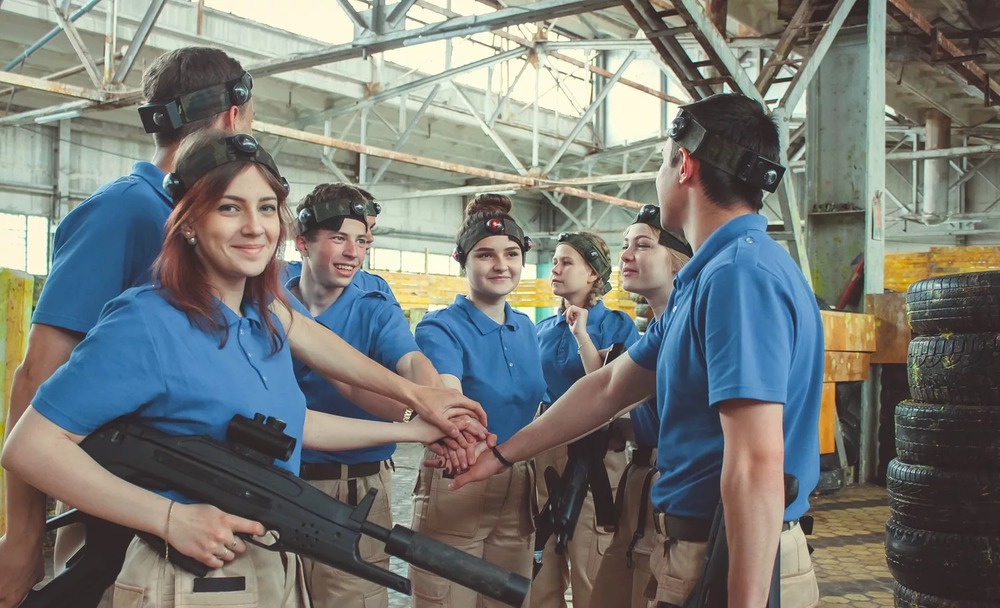
As a base model for this type of project, we recommend considering the MP9-LT PHOENIX.
It is a compact model, 39.5 cm long and weighing about 0.8 kg. Its small size is convenient when the equipment is used by children of different ages: the blaster is easier to hold during the game, store, and issue to large groups.
However, the choice of a specific model should not be based only on the idea that “this is for children.” The age of participants, the planned play area, and the program format may vary. That is why, before delivery, we can offer several options and select equipment for the specific needs of a particular camp.
The key point is not to assemble a purchase from separate catalog items, but to build a compatible system.
How Many Blasters Are Needed for Regular Operation
The amount of equipment should not be calculated strictly by the number of participants.
If you plan a 10 vs. 10 game, twenty blasters will indeed be used directly on the field. But for normal operation, a reserve must be included.
During a game, any unit may need to be replaced: for example, because of a low battery, a drop, or a technical issue. In such a situation, the activity should not stop while a staff member deals with the problematic device.
That is why we recommend having two ready-to-use reserve blasters for each team.
For a 10 vs. 10 game, the working set should include 24 blasters: 20 main units and 4 reserve units.
Reserve equipment should not be stored “just in case” in a closed box. It must be charged and configured together with the main sets so that it can replace a unit directly during the game.
It is also worth providing spare hit sensors. Their number is calculated according to the selected system.
How Long the Equipment Works Without Charging
For the MP9-LT PHOENIX, continuous operating time is up to 30 hours.
For a children’s camp, this is enough for the equipment to be used by several groups without constant recharging between short game sessions.
At the same time, the autonomy of the entire system depends not only on the blasters. The system also includes hit sensors and additional electronic devices, each with its own battery and operating time. That is why, when selecting equipment, we calculate not just one blaster, but the entire charging infrastructure of the project.
The responsible staff member can also check the equipment before an activity and send devices to charge in advance, instead of waiting until a battery runs out during the game.
Is a Separate Arena Required
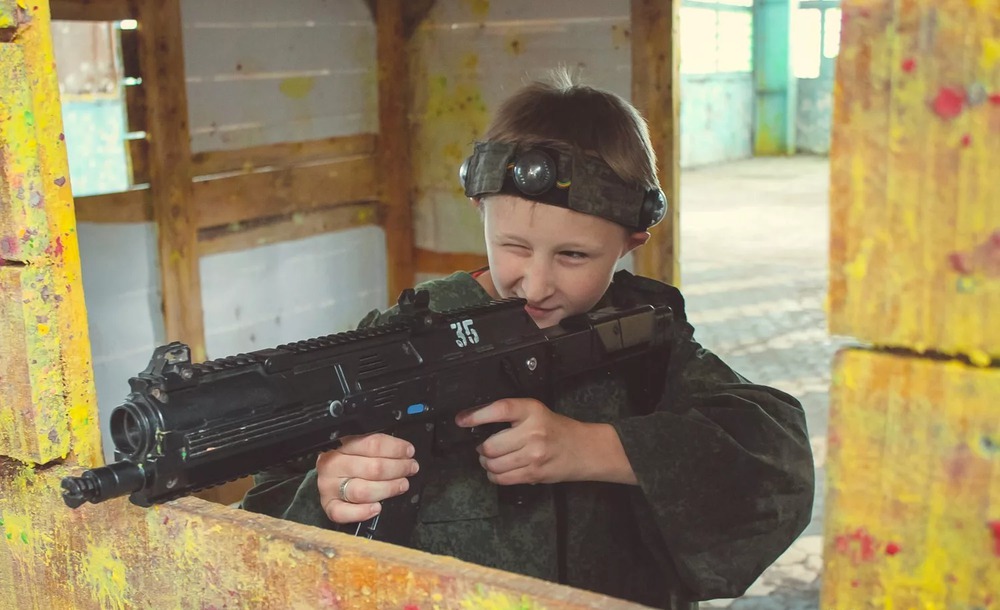
No. For a children’s camp, this is one of the advantages of laser tag.
Full-scale games can be held on the camp’s existing territory: a sports field, a prepared park area, or another safe outdoor zone.
Before preparing the play area, we also recommend using our guidelines for organizing safe laser tag games.
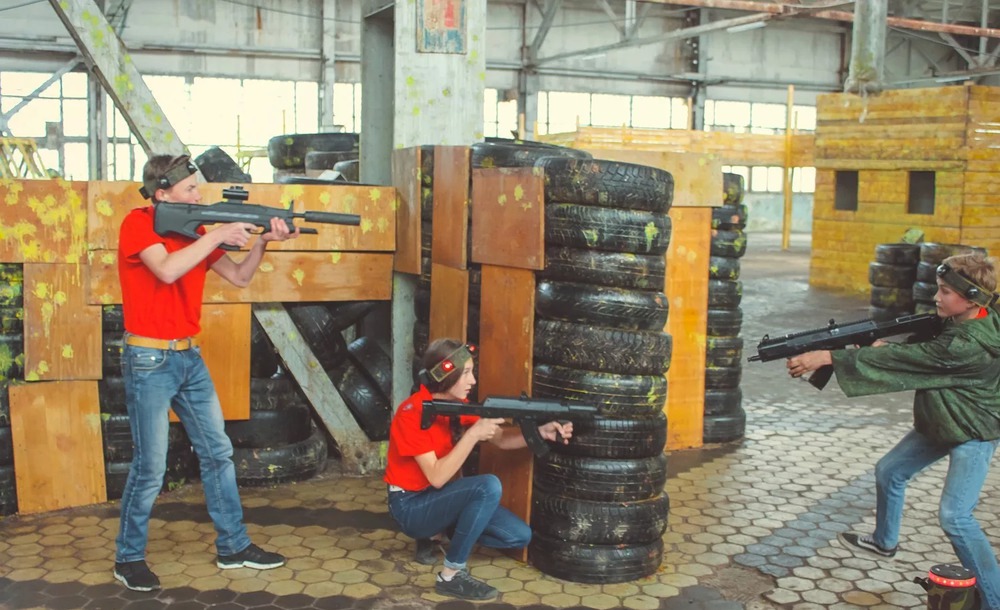
If necessary, the game space can be supplemented with mobile inflatable covers. Their placement can be changed, so the same area can easily be rebuilt for different scenarios.
In bad weather, some programs can be moved to a gym or indoor hall. In this case, there is no need to recreate a large outdoor match. Teams can be reduced, distances shortened, and a scenario selected for the available indoor space.
This makes the equipment usable much more often than a system tied to one specialized arena.
How Equipment Is Used During the Day
For regular operation, the process should be simple and clear.
Before an activity, the responsible staff member checks the equipment charge, saves the required game settings, and prepares both the main set and the reserve units.
After the session, blasters and sensors are returned to storage. If any device caused questions during the game, it is better to separate it from the working equipment immediately and check it separately. The remaining sets are prepared for the next use and charged if necessary.
If the same equipment is used by different groups of children, the camp also defines how it should be handled between sessions, taking into account the materials of the products, operating documentation, and its own hygiene requirements.
As a result, a normal working cycle is formed around the equipment, instead of a situation where the sets are taken out of boxes only a few times a year.
What to Do If a Technical Problem Occurs
A camp staff member does not need to repair a blaster directly during an activity. This is exactly why reserve equipment is included.
The problematic device can be checked calmly after the game. Sometimes the cause is related to settings, charge level, or the connection between system elements, and can be fixed on site.
If the issue cannot be resolved independently, you can contact our technical support team. LASERWAR specialists will help check the settings, software operation, and equipment, and will advise on the next steps.
Instructions, user manuals, software, and operating materials are also available on the website.
For a camp, this means that after delivery it is not left alone with the technical side of the system.
What Warranty We Provide
The MP9-LT PHOENIX recommended in this article comes with a 24-month warranty.
The warranty period for other elements of the set depends on the specific type of equipment and is specified in the product documentation. Therefore, it may not be the same for the entire project.
Before shipment, the equipment is tested. If a malfunction occurs during the warranty period, you can contact our support service and, if necessary, send the product for warranty service.
This is important for camps because the set is purchased for long-term use, and technical support after purchase is part of the normal operation of the system.
How a Set Is Formed for a Specific Camp
We do not suggest starting the selection process with the maximum number of devices from the catalog.
First, it is necessary to define the program itself: how many children will play at the same time, what age they are, where the games will be held, and which formats are most relevant for the camp.
After that, the main number of blasters and reserve units is determined. Compatible hit sensors, setup and control tools, and charging equipment are selected.
Only then does it make sense to add scenario devices.
If the camp wants to run territory control games, a control point is added to the system. For accuracy competitions, electronic targets are required. For other team mechanics, additional game devices can be selected for a specific scenario.
This way, the equipment set is built around the camp’s real tasks, not the other way around.
Can the Equipment Be Used for Several Years and Expanded Later
Yes. A camp does not need to purchase every possible element at once.
You can start with a basic working set, master several scenarios, and see which formats are most popular among children and staff.
Later, the system can be expanded: by increasing the number of game sets, adding new scenario devices, or equipping another play area.
Before expansion, we will check the compatibility of the new equipment with the system already in use and suggest suitable devices.
This means the initial purchase does not limit the camp to one fixed configuration for the entire period of use.
One Set Becomes a Complete Activity Direction for a Camp Program
Laser tag can be used not as a one-time event, but as a permanent equipment base for active recreation.
The equipment allows staff to change game parameters, use different scenarios, run activities outdoors and indoors, and gradually expand the program.
With the right selection, a children’s camp receives not just a set of blasters, but a system that can be used regularly by its own staff: with clear software, operational reserve equipment, technical support, and warranty coverage.
We Will Select Equipment for Your Children’s Camp
To calculate the set, simply tell us how many children should participate at the same time, how old they are, where the games are planned, and which activity formats you want to run.
We will select the equipment, calculate the necessary operational reserve and charging infrastructure, and suggest additional devices for specific game scenarios.
You must be logged in to post a comment.