


 LASERWAR
 CyberTag
 LaserArena
 May maneuvers
 Laserwar CRM
 Laser tag
 ZombieTag
 Lasertag
 Alphatag
 Laser tag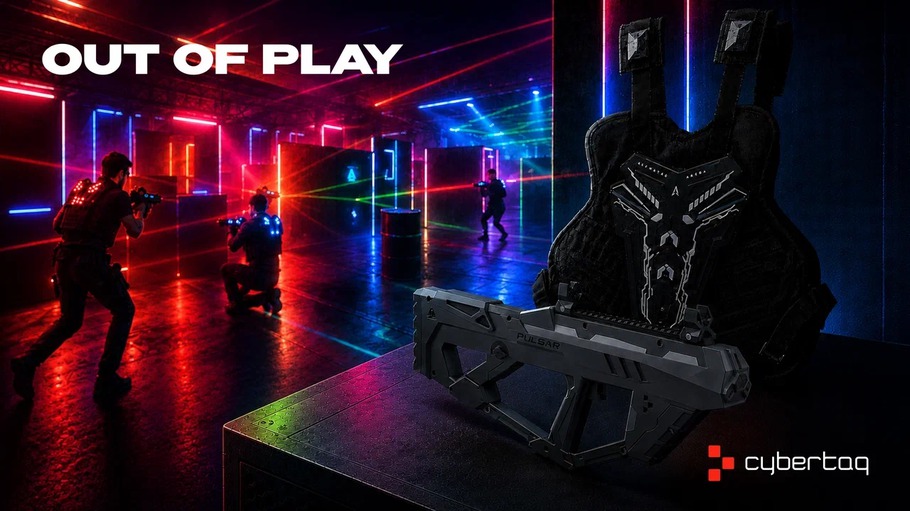
How Much Does a Kit Cost When It’s Out of Play?
When choosing equipment for a laser tag arena, an entrepreneur usually looks at the kit price first. That makes sense: you need to calculate the initial investment, the number of players, and the launch budget.
But the real cost of equipment becomes clear during operation.
If one kit is temporarily out of service, the expenses are not limited to the cost of a spare part. The owner also has to factor in:
- time spent finding the fault;
- equipment diagnostics;
- the work of a technical specialist;
- ordering and delivery of components;
- repair or replacement of damaged elements;
- equipment downtime;
- a reduced number of available game kits.
This is especially unpleasant when a malfunction occurs during peak load.
Imagine this: a group of 20 people has booked a game, but two kits are undergoing diagnostics. You have to look for backup equipment, change team lineups, delay the start of the session, or explain to guests why some players cannot enter the arena at the same time.
At this point, a technical issue becomes a service issue.
Visitors do not know how long the equipment had been working before that or why the malfunction occurred. They only see the result: waiting, a changed game program, or a kit that is out of play.
A kit that is out of play costs the owner more than just repairs. It costs time, disrupted sessions, dissatisfied guests, and lost profit.
That is why professional equipment should do more than look impressive. It should be designed for intensive daily operation and help arena owners reduce the number of potentially vulnerable elements.
Why We Created a Wireless Solution
During the game, players are constantly moving:
- running between cover;
- turning sharply;
- crouching;
- changing the position of the blaster;
- colliding with elements of the game maze.
The new equipment line was created for venues with high game dynamics, heavy traffic, and a demand for maximum freedom of movement.
In AlphaTag Arena, we removed the connecting cable between the Pulsar blaster and the Defender vest. The devices communicate wirelessly and operate as a single game kit.
We did not reinforce the cable.
We removed it.
What Does This Give the Player?
More freedom of movement.
A player can change the position of the blaster faster, turn, and move between cover without feeling tension between the weapon and the vest.
The kit is perceived as a unified technological system: hits, lighting, vibration, sound, and information on the display become part of one shared game interface.
What Does This Give the Arena Owner?
The absence of a connecting cable means the kit has fewer elements that regularly experience mechanical stress.
This does not eliminate the need for maintenance, battery monitoring, and settings checks. But one potentially vulnerable element, the cable between the blaster and the vest, is simply not present in the system.
In addition to wireless communication, AlphaTag Arena offers:
- a modern electronic platform based on ARM architecture;
- a color IPS display on the blaster;
- the Ambi Light 2.0 lighting system;
- a second-hand sensor;
- blaster charging via USB Type-C;
- more than 20 built-in game scenarios;
- support for more than 15 types of additional devices;
- software control from computers and mobile devices.
This allows you to view the equipment not as a set of separate blasters and vests, but as a scalable game ecosystem.
Today, you launch a classic team battle. Tomorrow, you add digital flags, bases, control points, mines, or interactive targets. Then you run a tournament and use statistics to determine the winners.
One venue means different scenarios and new reasons for guests to come back.
Don’t Count Only the Purchase Price
When choosing equipment, it is useful to ask the supplier several questions:
- Which elements of the kit are exposed to the highest load?
- How quickly can diagnostics be performed?
- Which spare parts should be kept on site?
- Can a damaged element be replaced without long downtime?
- How are warranty and technical support organized?
- How easy is it to expand the system after launch?
- Which game scenarios and additional devices does the platform support?
- How many backup kits will be needed for your level of traffic?
The right configuration should take into account not only the arena size and the number of players. It is also important to consider the operating schedule, number of sessions, audience age, storage, charging, maintenance, and further project development.
A kit that is out of play does not help the venue accept new players, run the next sessions, or generate profit.
That is why the value of equipment is determined not only by its catalog price, but also by how conveniently it works in a real business.
Fewer vulnerable connections.
More freedom for the player.
More focus on the game itself.
Would you like to choose equipment based on your arena size, number of participants, and expected venue load?
Leave a request, and CYBERTAG specialists will help calculate the right configuration for a new project or for upgrading an existing venue.
You must be logged in to post a comment.