


 LASERWAR
 CyberTag
 LaserArena
 May maneuvers
 Laserwar CRM
 Laser tag
 ZombieTag
 Lasertag
 Alphatag
 Laser tag
Full List of CYBERTAG Game Scenarios for Arena Laser Tag
Arena laser tag is valued for its dynamics, spectacle, and easy-to-understand rules. However, if every battle is played in the same format, even the most impressive arena can become quite predictable.
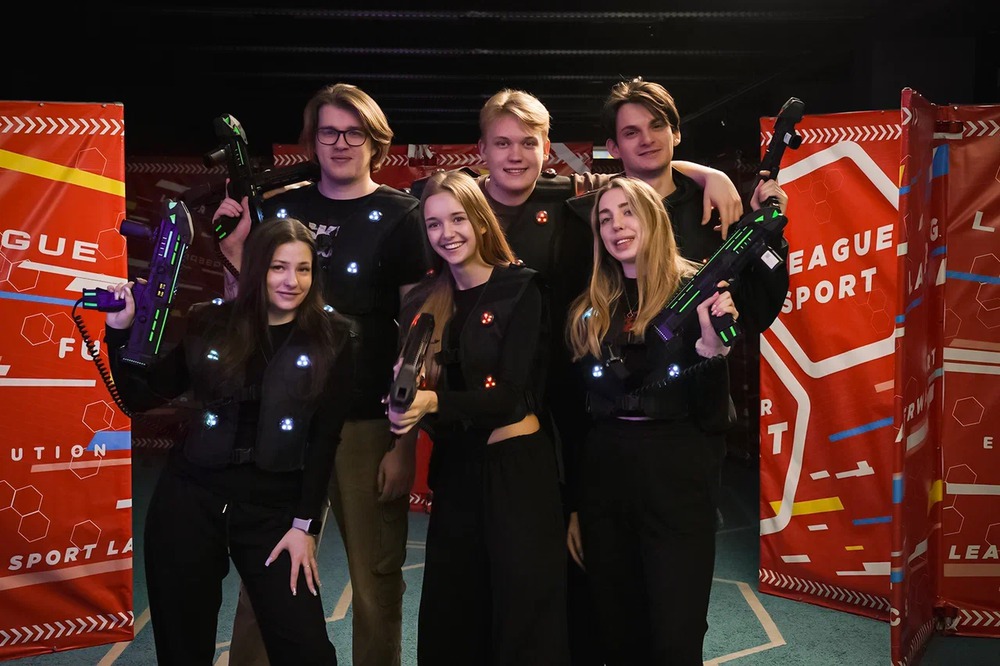
That is why the CYBERTAG software includes a library of game scenarios: from classic shootouts to modes with bases, flags, zombies, radiation, and other additional devices.
Imagination in arena laser tag has no limits: ready-made scenarios can be manually adjusted, combined with each other, or used as a basis for custom game modes. The CYBERTAG configurator allows you to customize game parameters, add new events, and adapt the rules to the format of your arena and the interests of your players.
Below is a list of the main scenarios available by default that can help diversify gameplay. For convenience, each mode is described according to the same structure: the essence of the game, scoring, respawn rules, and victory condition.
1.Best of the Best
A classic free-for-all mode. Players earn rating points for hits and eliminations of opponents. A player can respawn automatically after a set time, 10 seconds by default.
The player with the highest score is visually highlighted: their vest and blaster change their base glow color and begin to flicker. The leader may change during the round. The participant with the highest number of rating points wins.
2. Confrontation
A team scenario for two teams. Players receive rating points for hits and eliminating opponents. A killed player can automatically respawn after 10 seconds.
The team with the highest number of rating points by the end of the game wins. This is a basic team mode, convenient for introducing beginners to arena laser tag.
3. Tag
Players are divided into two teams and earn points for hits and eliminations. The main difference from a regular team battle is that there is no classic in-game death.
When a player’s health drops to zero, they automatically switch to the opposing team. The round continues until all participants end up on the same team. After that, a new round begins with a new team split.
4. Confrontation: Base Capture
Two teams fight not only for rating points, but also for the opponent’s bases. The bases are represented by IGBs. To capture a base, players must shoot the IGB and deplete its life resource.
Players receive points for hitting opponents, eliminations, and capturing bases. Energizers are recommended for player respawns. 15 seconds after capture, the base is restored and returns to the game. The team with the highest rating wins.
5. Invincible
A team scenario for two teams. Players receive points for hits and eliminations, but do not respawn automatically. Energizers are recommended for recovery.
The main feature of this mode is an additional base in the center of the arena. Every minute, it grants players invulnerability, but the effect only works near the base and lasts for a limited time. Players must control the center of the arena and use this short advantage wisely.
The team with the highest number of rating points wins.
6. Battle for Rating
Mechanically, this scenario is similar to “Best of the Best”: everyone plays for themselves and earns rating points for hits and eliminations. However, in this mode, in-game death is especially dangerous because a player loses 10 rating points upon dying.
After eliminating an opponent, the player receives not only points but also health restoration to the initial value over several seconds. The more successful a player is in attacking, the harder they are to stop. The participant with the highest rating wins.
7. Last Hero
A free-for-all mode without automatic respawn. Players earn points for hits and eliminations, but after death they are eliminated from the current round and wait until only one survivor remains.
The last remaining player receives the title of “Last Hero,” additional rating points, and visual highlighting on the vest. Then a new round begins. The player with the most points wins.
8. One Shot
A two-team scenario where each player has only one health point. Any hit is fatal, so the rule is: “one shot, one kill.”
There is no automatic respawn; energizers are recommended. Rating points are awarded for each elimination. The team with the most points wins. The mode requires caution, accuracy, and well-planned tactics.
9. Control Points
Two teams fight for rating points and control points. IGBs serve as the control points. To start capturing one, players must shoot the IGB. After that, the hold timer begins.
To fully capture an IGB, the team must hold it for a set time, 5 minutes by default. Each second of holding brings rating points. The game may end if one team captures 3 IGBs. There is no automatic respawn, so energizers are recommended.
10. Bomb Planting
The scenario is built around team bases equipped with IGBs. The bomb is virtual: no separate physical object is required.
An IGB can be in three states. Yellow means the bomb has not been issued and the base is not mined. Purple means the bomb has been issued to an ally. Red means the enemy has planted the bomb and defusing is required.
To receive the bomb, a player shoots their own IGB. Then they must reach the enemy base and shoot its IGB to plant the bomb. After that, the countdown to explosion begins. If allies do not defuse the base by shooting it within the set time, the IGB explodes. Points are awarded for planting, detonating, and defusing.
11. Capture the Flag
A team scenario with flags located at team bases. To take the enemy flag, a player must shoot the opponent’s IGB. After that, the player’s vest changes color, and the IGB also changes its glow color.
The player must bring the flag to their own base and shoot their own IGB. Only then are points awarded. The flag can be intercepted by opponents and returned back. The team that brings more flags and earns more rating points wins.
12. Energizer Connection
This is not a full scenario, but a template that can be used together with other modes. It allows energizers to be added to the game: devices for respawning players and restoring game resources.
By default, there are energizer variants that automatically revive players every 5 seconds, as well as energizers activated by pressing a button. It is important to consider the IGB’s team affiliation: if the device must be neutral, it can be configured as a separate team that does not actually participate in the game.
13. Chaos
Players are divided into two teams but do not know who their allies are. The base glow color is the same for both teams. The only way to determine a player’s affiliation is to shoot them.
The hit color differs for each team, so after the first encounters players begin to understand who is on their side. Points are awarded for hitting opponents, while hitting teammates can result in a negative score. The team with the highest rating wins.
14. Lone Zombie
A free-for-all mode with a special zombie role. Rating points are awarded for eliminations and hits. One of the players becomes a zombie.
If the zombie kills another participant, that player changes their base glow color, loses rating points, and becomes a zombie as well. The most dangerous thing is to remain a zombie at the end of the game: 1,000 rating points are deducted for this. The player with the highest number of points wins.
15. Spartans
A team scenario with asymmetric objectives. One team defends its base and repels waves of opponents. The second team must break through the defense and destroy the base.
If a player from the defending team is killed, they automatically switch to the attacking team. Rating points are awarded for eliminations and hits. The team with the most points wins.
16. Simple Capture the Flag
A simplified and tougher version of “Capture the Flag.” A player must take the flag, carry it to their base, and thereby bring victory to the team in the round.
If the player carrying the flag is killed, the flag returns to the base it was taken from. Rating points are also awarded for eliminations and hits. In this scenario, players have almost no room for error.
17. Football
Players are divided into two teams. At the beginning of the game, one participant is highlighted in orange and is considered the player with the “ball.”
The task of the player with the ball is to carry it to the enemy base and shoot the IGB to “score a goal.” The ball can be passed to allies by shooting them. When passed to an ally, health is restored. Allies can also take the ball by shooting, but in that case the shooter’s health is not restored.
The team with the most points wins.
18. Zombie Apocalypse
This scenario requires IGBs for each team: humans and zombies. At the beginning of the round, players are automatically divided into two teams. There are fewer zombies than humans, but they are harder to kill.
When a human is killed, they turn into a zombie, and vice versa. The round lasts until all players are on the same team. After the round ends, participants are given time to spread out, then a new random division takes place. Players who were initially on the winning team receive additional points. The participant with the highest rating wins.
19. Radiation with 3 IGBs
The scenario begins with a preparation phase: players hide, a 30-second countdown starts, vests do not glow, and no one can be killed. According to the story, a radiation leak has occurred at a nuclear power plant, and only one person can survive.
Then the game begins, with everyone fighting each other. At first, IGBs revive players, but after some time a random IGB becomes radioactive: first it flashes yellow, then turns green and starts killing players. Players can respawn at the remaining safe IGBs. Gradually, all IGBs become radioactive, and the game continues until the last survivor.
20. Energy Battle
Each team has a base that revives killed players. The number of respawns is limited by the base’s energy supply.
Players can take energy from opponents by killing them. The accumulated energy must be carried to their own base and transferred by shooting the IGB. This increases the number of respawns available to the team. One player can accumulate only a limited amount of energy. If they die before reaching the base, the energy is lost.
Players can also attack the enemy IGB and reduce the opponent’s energy supply. The game ends when one team has run out of base energy and all of its players are dead.
21. Shootout
A simple team scenario for two teams. Each player has 5 lives, and automatic respawn happens after a set time, 10 seconds by default.
The task is very straightforward: eliminate all players of the enemy team. The team that does this first wins.
22. Elimination
Players are divided into two teams. Each team has a base that revives players. The respawn reserve is limited and depends on the number of lives the base itself has.
Players can attack the opponent’s base, dealing damage to it and reducing the number of available respawns. A captured base is restored after one and a half minutes. To win, a team must reach the moment when all players of the opposing team are simultaneously dead, even if the base is still capable of reviving them.
Conclusion
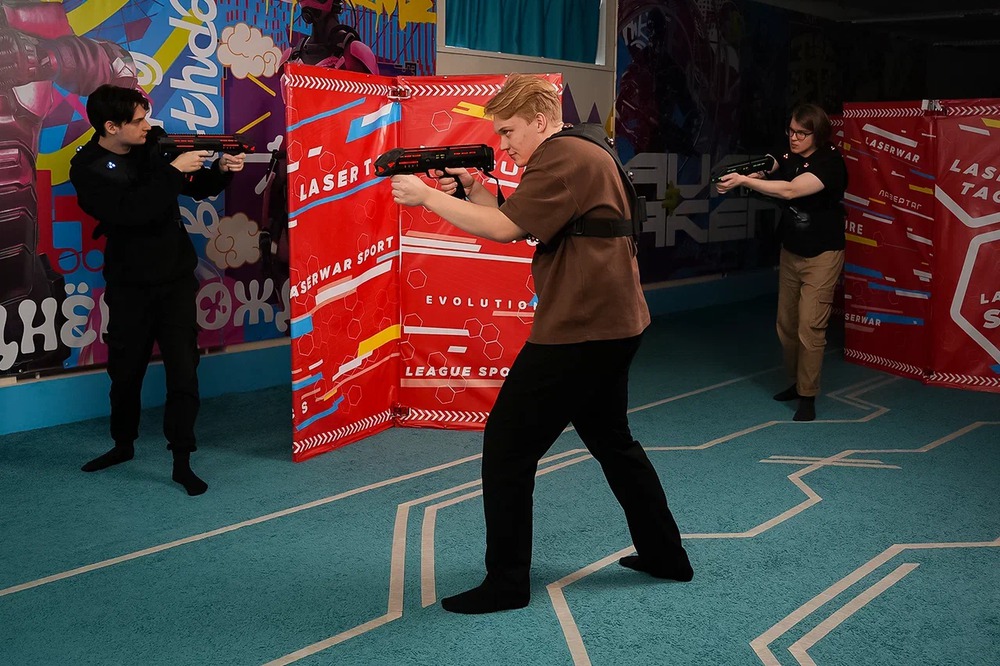
CYBERTAG scenarios make it possible to run games for different audiences: beginners, children, experienced players, corporate teams, and fans of complex tactics.
Simple modes such as “Confrontation” and “Shootout” are suitable for a quick start, while scenarios with IGBs, energizers, flags, bases, and infection add depth, teamwork, and storytelling.
The main advantage of the system is flexibility. Each scenario can be adapted specifically to your arena. An administrator can use ready-made scenarios, change parameters, or create custom game variants in the scenario editor.
If you are planning to launch or upgrade an arena, you can view ready-made CYBERTAG sets on the website in the “Bundles” section.
You must be logged in to post a comment.